One Walk, One Pub, Nothing Else: The Quiet Art of the Under-Planned Cottage Weekend

Somewhere along the way, cottage weekends acquired itineraries.
You know the sort. A printed schedule on the kitchen table: Saturday, 9am, market town; 11am, castle; 1pm, lunch booked; 3pm, waterfall; 5pm, cream tea; 7pm, the pub that was recommended by a colleague's cousin. Sunday similarly packed, with a checkout deadline waiting at the end like a small guillotine.
We have all done it. We have also all come home from those weekends slightly more tired than we left. So this is the case for the alternative: one walk, one pub, and a great deal of unstructured time in between.
The myth of the packed weekend
There is a quiet assumption that a short break must be maximised. Two nights away, therefore two nights of activity. But a weekend is not a project to be optimised. It is a small pocket of time, and pockets are more comfortable when they are not stuffed full.
The maths does not really work, either. A three-hour walk plus travel to and from the start point plus lunch plus a museum plus dinner is not a restful day. It is a working day with better scenery. The pleasure of a cottage break comes largely from what you do not do.
Choosing the one walk
The walk should be chosen before you go, but chosen loosely. Pick a route of three to five miles with a pub roughly two-thirds of the way round. That is the whole specification.
A few things worth looking for:
- A loop, not an out-and-back. Loops feel like journeys; there-and-back feels like a chore on the return leg.
- Low ascent. In winter, hills mean mud, wind and shorter daylight. A valley path or a riverside trail is usually the better call.
- Something to look at. A church, a bridge, a ruined barn, a wide view. Not scenery on an epic scale — just something that makes you stop.
- A bail-out point. A lane or a shortcut that gets you home if the weather turns or small legs tire.
Use an Ordnance Survey map or a reputable walking app, and read the recent reviews rather than the glossy description. A path described as "occasionally muddy" in August is a different proposition in January.
Building in rest
The mistake people make is treating the walk as the day's activity and everything else as filler. In fact, the rest is the point. A long breakfast. A second cup of tea. Sitting on a bench halfway round for ten minutes doing nothing at all.
There is a specific pleasure in returning to a cold cottage, lighting the fire, and having absolutely no plan until dinner. No next thing. The day has already delivered its one event, and it was a good one.
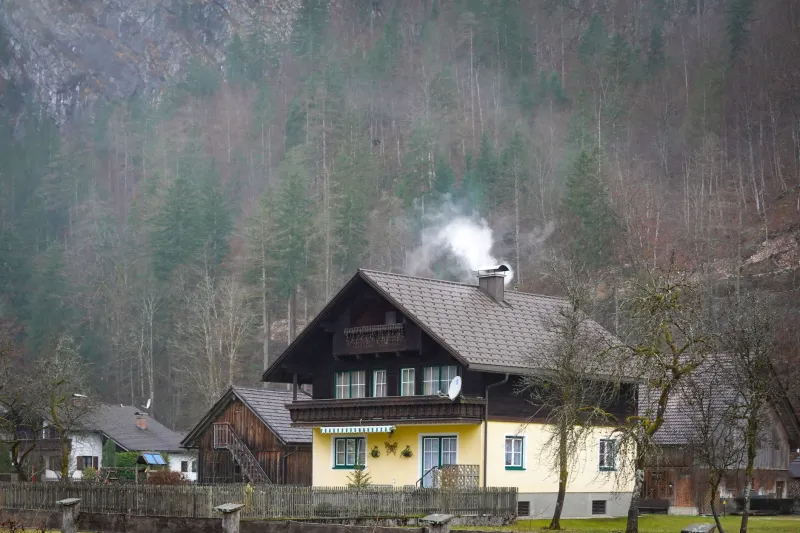
This is also, incidentally, why cottages beat hotels for this kind of break. You have a sofa, a kettle and a door you can shut. A hotel lobby invites you to go and do something. A cottage invites you to sit down.
Letting the landscape set the pace
Different places ask for different things, and a good weekend listens to them. A flat coastal path in Norfolk suggests a long, slow amble. A Dales village in February suggests a shorter walk and an earlier pub. A Welsh valley in mist suggests skipping the summit entirely — nothing is lost, and the low route is often the lovelier one anyway.
Resist the urge to treat a walk as a target to be completed. If the path is flooded, turn around. If a gate is locked, take the lane. If the pub is closer than expected, arrive early. None of this is failure; it is the whole idea.
Families, in particular, benefit from this. Children do not need a five-mile hike to have a good time — they need a stream to poke at, a wall to balance on and a hot chocolate at the end. Adults pretending otherwise are usually the ones who end up carrying someone.
What to pack for a one-walk weekend
Boots you have already worn in. A waterproof that folds small. A torch, even for a midday start. A flask. A spare pair of socks in the car. And a laminated sense of perspective about the fact that you will not see everything the region has to offer — you were never going to, and that is fine.
The case for doing less
The best cottage weekends we hear about are almost embarrassingly simple. A walk to a pub. A fire. Something from the oven. A game of cards. Maybe a second walk on Sunday morning if the sun comes out, and a decision not to bother if it does not.
That is not a weekend with nothing in it. It is a weekend with the right amount in it. There is room to notice the light on the hills, the smell of woodsmoke, the fact that nobody is checking their phone because there is no signal and no reason to.
So leave the itinerary at home this time. Pick one walk. Find one pub. Let the rest of the weekend happen to you.