Boots Before Beds: Fact-Checking the Walk From the Cottage Door
There is a particular phrase in cottage listings that does a lot of quiet work: 'walks from the door'. It sounds lovely, and sometimes it is. Other times it means a two-mile trudge along a lane with no verge before you reach anything resembling a path. The trick is not to distrust the phrase, but to read the map behind it before you commit.
At Mary's Cottages, we like a cosy stay as much as anyone. But a weekend is short, and the best cottage walk is not the most dramatic one on the listing. It is the one you can actually do in the boots you packed, at the time of year you booked, with the people and dogs in the car.
Start with the map, not the photographs
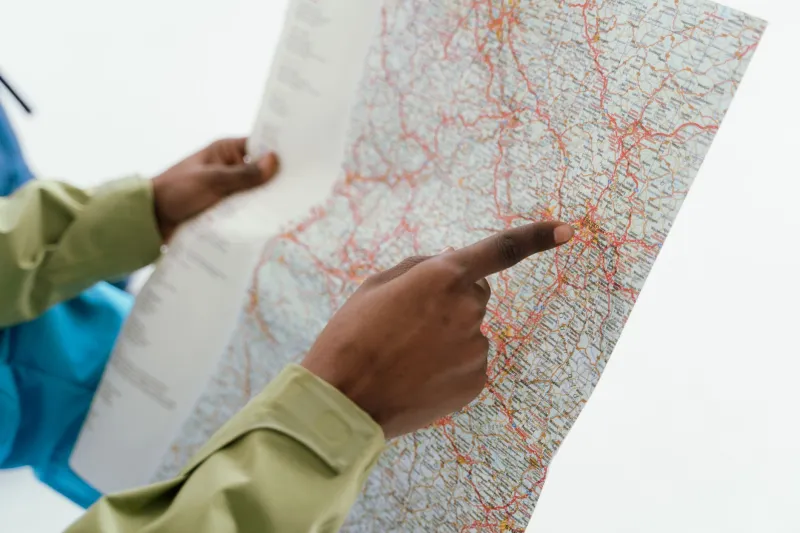
A log fire and a welcome hamper tell you how a cottage feels. A map tells you how it behaves. Before booking, open Ordnance Survey's OS Maps or a reliable footpath app and find the cottage by its postcode or grid reference. Switch to the 1:25,000 Explorer view if you can. That is the scale that shows field boundaries, footpaths, gates, contours and the small details that decide whether a walk is a gentle potter or a proper outing.
Do not simply trust the red line a route-planning app draws. Apps are excellent at finding a theoretical link between two points. They are less good at telling you that the link is a steep, rooty scramble in November or that the final half-mile is a busy B-road with a blind bend. Use the app for the shape of the walk, then look at the map for the truth of it.
Contours: the honest bit
Contour lines are the quiet characters in this story. On a 1:25,000 map they sit in the background, brown and unremarkable, until you notice how close together they are. Tightly packed contours mean steep ground. Widely spaced ones mean a gentler slope. If your proposed loop crosses several close-set lines, you are not planning a stroll; you are planning a climb.
A useful check is to look at the total ascent, not just the distance. A two-mile walk with 250 metres of climbing is a different beast from a two-mile walk on the flat. That difference matters most with small children, older knees, a dog recovering from a limp, or a weekend bag that somehow got heavier on the drive down. If the app offers an elevation profile, read it. If it does not, trace the route with your finger and count the contour crossings. It takes thirty seconds and saves a lot of sighing.
Symbols, stiles and the reality of a right of way
On an Explorer map, public footpaths generally appear as green dashed lines. Bridleways are often shown with green dashes and dots, and byways with green dashes and crosses. These symbols are not decorative. They tell you who the path is for and, sometimes, what to expect underfoot. A footpath can be a lovely grassy track through a meadow. It can also be a narrow strip between a fence and a ditch.
Look for the small gate and stile symbols too. A kissing gate is usually straightforward. A stile may be fine for a couple with day packs and less fine for a family with a buggy, a reluctant toddler or a large dog that has never quite mastered the art of being lifted. Stiles also vary enormously on the ground. One person's sturdy step-over is another person's ankle-twisting obstacle. Check recent reviews or local walking notes where you can, and assume that a route described as 'a few stiles' will feel like more after lunch.
Mud is the other honest detail. A path can be perfectly legal and perfectly impassable in January. If the route crosses low-lying fields, follows a stream or runs through woodland, pack accordingly or choose a higher, drier line. The map will not tell you how deep the mud is, but it will tell you where the water wants to sit.
The pub distance test
The nearest pub is not always the nearest pub by foot. A village may have a lovely inn half a mile away as the crow flies and a two-mile walk around the fields to reach it. Before you book, plot the walking route, not the driving route. Check whether the final approach is a lane with a pavement, a footpath across a field, or a fast road with no verge. The difference matters on a dark winter evening.
This is also where a cottage can quietly win or lose. A pub within a twenty-minute walk, on a route you would happily do with a torch, is a genuine treat. A pub that requires a car and a designated driver is still nice, but it is a different kind of weekend. If the listing mentions 'a short stroll to the village pub', put the route on the map and see what short means.
Match the walk to the party
For couples, the sweet spot is often a two- to four-mile loop with a pub at the end and no more than one proper hill. Look for lanes, field paths and a route that can be shortened if the weather turns. A single stile is fine; a ladder of them is less romantic than it sounds.
For families, prioritise easy gates, short distances and a clear reward. A flat mile to a village green with a playground or a pub garden will usually beat a spectacular ridge walk that requires promises, snacks and a piggyback. Check for stiles that would defeat a buggy, and look for routes that follow quiet lanes rather than roads with no verge.
For dog owners, the details are everything. Are there livestock fields on the route? Are the stiles dog-friendly, or will you be lifting a muddy collie over every fence? Is there water on the way? Is the pub dog-friendly, and does it have a garden rather than a no-dogs policy? A green dashed line on the map is a right of way, not a guarantee of off-lead freedom. Around livestock, the lead goes on. Plan for that.
A five-minute pre-booking routine
Find the cottage on the map. Identify the nearest public footpath, bridleway or quiet lane. Draw a loop that suits your shortest-legged walker, not your most ambitious one. Check the elevation profile and the total ascent. Plot the route to the pub and look at the final approach. Read the symbols for stiles and gates. Save the map offline, because rural signal is a rumour. Then ask yourself the only question that matters: would I be happy doing this walk in the boots I am actually bringing?
If the answer is yes, book the cottage. If it is no, find another one. There are plenty of cosy stays with a gentler path from the door, and a weekend is too precious to spend it negotiating a stile in the rain.
The best cottage walk is not the one with the best view on the listing. It is the one that fits the day you are having, the company you are keeping and the boots by the door. Read the map first. Then let the fire, the kettle and the lane do their work.