The Second Kettle Principle: Sharing a Cottage Without Sharing a Schedule
There is a particular moment on the first evening of a shared cottage break. Two cars on the gravel, four adults in a hallway performing the national dance of 'no, you take the big room', and a child somewhere upstairs claiming a bunk. It lasts about twenty minutes. What happens after that moment — whether the weekend settles or seizes up — is decided almost entirely by the house you booked, and a handful of arrangements made before anyone packed a bag.
The trick with two families is not finding a cottage big enough. It is finding one designed for handovers: space passed quietly from one group to another, time passed in the same way. A big table and a hot tub will not do it on their own.
Count Doors Before You Count Beds
Bedroom numbers tell you surprisingly little. What you want to know is how many doors you can close, and what is behind them.
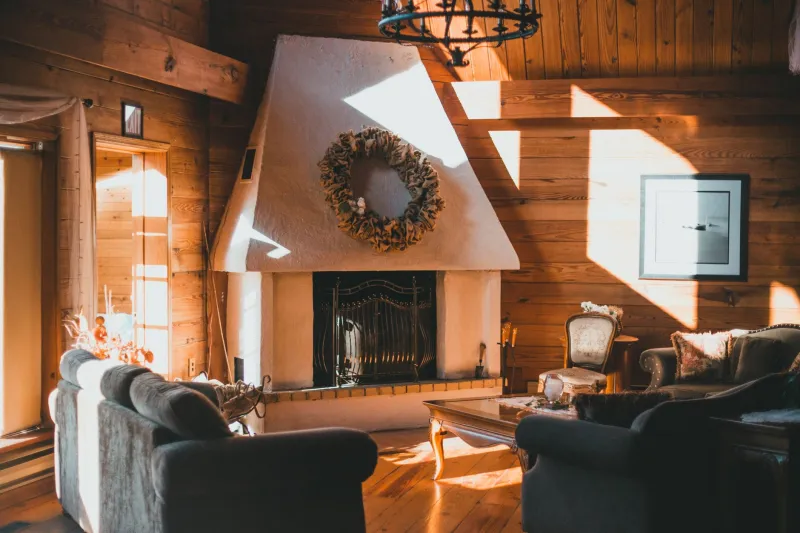
Start with bathrooms. Four adults and four children sharing one is a queue, not a holiday. Two is the minimum, and if one is en-suite so much the better, because it takes the morning bottleneck off the landing. Next, look for a second sitting space — a snug, a garden room, a corner of a big kitchen with two armchairs. It does not need to be grand. It needs to exist, so that the early riser with a book and the night owl with a bottle of something can occupy the same cottage without occupying the same room.
Then read the floor plan properly, not the photo gallery. A 'family room' that turns out to be a double with bunk beds wedged in is fine for one household and considerably less fine when it is two sets of siblings negotiating territory. And check the parking: two cars arriving on a Friday in a lane that fits one and a half is an avoidable opening scene.
The Kitchen Test: Two Kettles, One Dishwasher
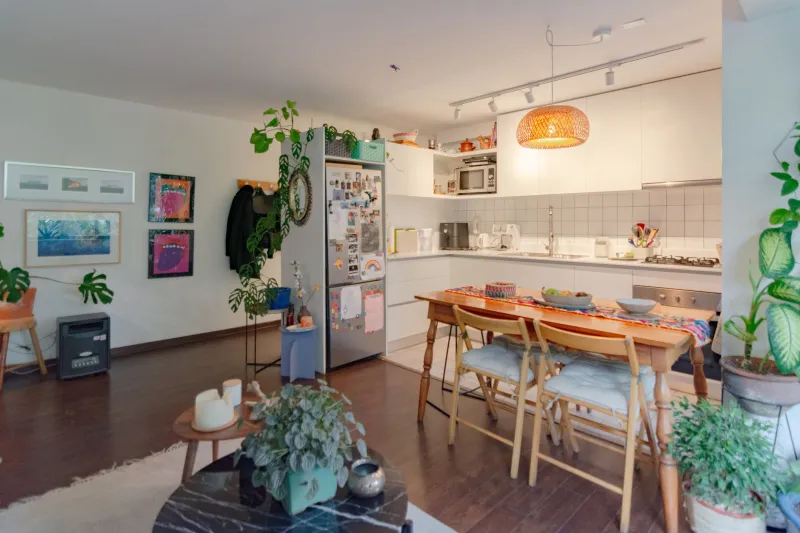
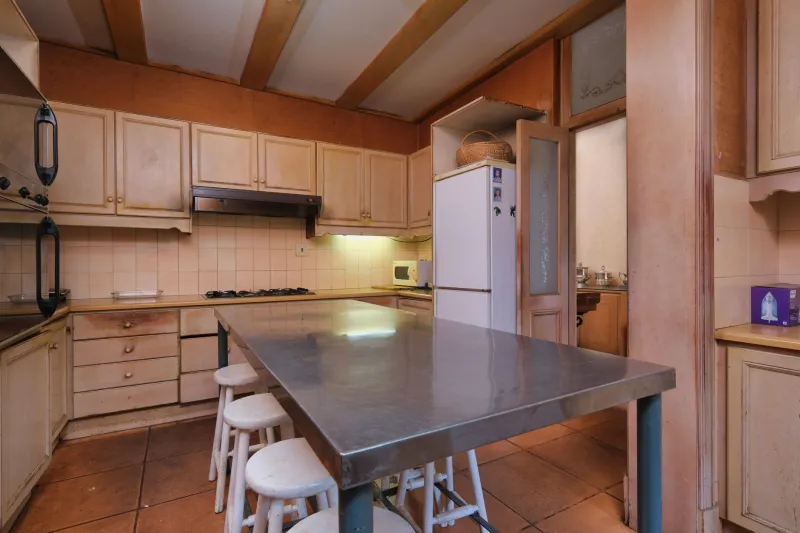
The best shared kitchens have a bit of worktop either side of the sink and enough fridge to hold two separate food shops. Ask, before booking, whether there is a larder, a pantry or a genuinely cold back porch — anywhere the second family's milk and cheese can live without a small diplomatic incident every breakfast.
Two kettles is a small luxury. One kettle with eight people waiting is a small tyranny.
Beyond that, it is about not catering as though you are running a hotel. A simple rhythm works: one family cooks the first night, the other cooks the second, and the pub at the end of the lane takes the third. Breakfast is self-service, with a rota for who puts the bread out. Nobody makes a full cooked breakfast for eight unless they truly want to, and nobody should feel obliged to say yes when asked.
Rooms With a Job to Do
Half-term in Britain is wet. Not always, but often enough that you should choose the cottage as though it will be. That means a boot room or a utility with a hard floor, somewhere to hang four sets of waterproofs, and an outside tap for the dog. An airing cupboard that actually warms is worth more than a decorative feature wall.
A back door that opens onto a yard, a path or a bit of grass changes the whole feel of a shared break. Children come and go without a production. Adults can stand outside with a mug while someone else reads the riot act about shoes.
A Walk That Lets People Leave
The single most useful thing you can arrange for two families is a walk with an exit route. Not a there-and-back trudge where turning round becomes a group decision, but a route with a natural decision point: a village in the middle, a tea room, a bench with a view, a pub at the three-mile mark.
Look at the map for a footpath that clips the edge of a village, so one adult and a tired six-year-old can peel off for chips while the rest carry on over the hill and rejoin them an hour later. Nobody has to announce that they are struggling. Nobody has to negotiate. The walk simply offers two versions of itself, and people take the one they can manage that day.
That is the whole art of the shared weekend, really — arranging things so that splitting up is easy and rejoining is easy too.
The Handover Hours
Arrival is where good weekends are quietly won. Agree a time and stick to it, rather than the vague 'we'll be there about four-ish' that leaves one family loitering on a doorstep. Better still, split the first hour: one household does the food shop while the other takes all the children to the park. The unpacking happens in a quiet house, and everyone meets again at six with something to eat and nothing to prove.
Departure deserves the same thought. The last morning is not the moment for a four-mile walk. Strip the beds, run one load of washing, wipe the surfaces, leave the key where you found it. A calm exit is the kindest thing you can hand the next set of guests — and the person you will be sharing with next year.
The Small Print Between Friends
Sort the money out loud before you book. Split the cottage cost down the middle, and be clear about the food shop, the pub meal and the parking. Check the dog policy before anyone promises the children a puppy-friendly garden. Check the cancellation terms. Decide who holds the booking and who pays the balance, so it is not an awkward message in February.
And resist the urge to over-schedule. Half-term fills itself. One proper outing a day is plenty when there are eight people to move.
What a Good Sharing Cottage Feels Like
You should not be able to point to a single moment of brilliant hosting. The weekend should simply have worked: one adult asleep in the snug while another makes the second pot of tea; four children arguing in the boot room about whose wellies are whose; a walk that divided at a gate and came back together over a plate of chips.
When that happens, the cottage has done the work — and the handover, of space and of time, has gone through without anyone noticing.