The Trudge Factor: Why the Walk Home Should Shape Your Cottage Booking
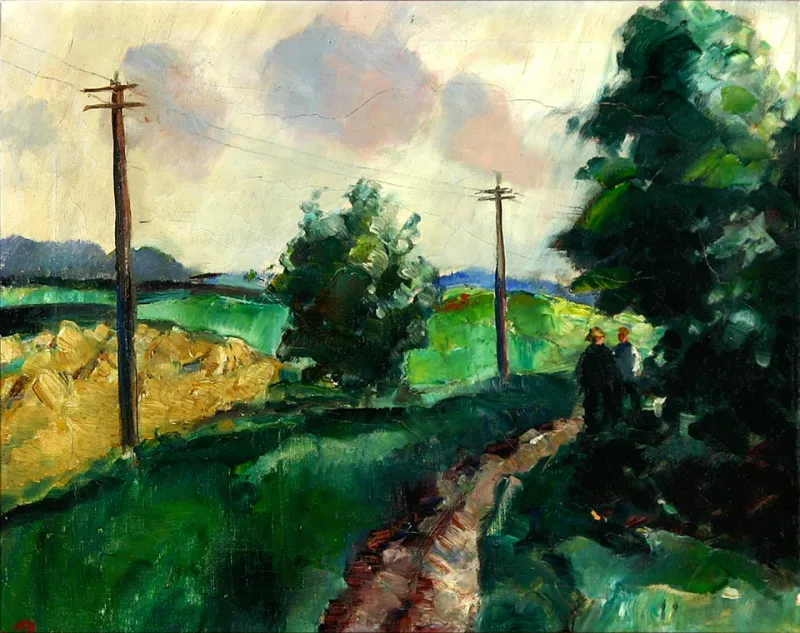
Photo: Willy Bille, Public domain, via Wikimedia Commons
You have chosen the cottage. You have circled the pub on the Ordnance Survey. You have even worked out roughly how long it takes to reach the nearest hill. But have you thought about the walk back?
It is the overlooked half of every cottage outing. The outward leg gets the anticipation, the photographs and the good boots. The return leg gets tired legs, fading light and the slow realisation that the lane you skipped down at eleven in the morning is a different beast entirely at half past four in the afternoon. If you want a weekend that ends with a contented sigh rather than a quiet grumble, it is worth choosing your cottage by its walk home.
The Return Leg Is a Different Walk
A footpath is rarely symmetrical. The gradients tilt the other way. The landmarks look unfamiliar from the opposite direction. A brisk twenty-minute stroll to the village can become a forty-minute shuffle when you are carrying a sleeping child, a damp dog or the remnants of a Sunday roast. This is not a reason to avoid walking. It is a reason to read the map twice: once for the journey out, and once for the journey back.
When you are browsing cottages, look beyond the distance to the pub. Ask yourself what the last ten minutes will feel like. Is it a flat pavement with a streetlight every thirty yards? Or is it a single-track lane with no verge, a blind bend and a gate that needs lifting rather than swinging? The answer will tell you more about your weekend than the thread count of the sheets.
Surface Matters: Pavement, Verge and the Muddy Field
Surfaces change everything. A tarmac pavement is forgiving. A grassy verge is fine in July and a quagmire in January. A public footpath across a field can be a lovely shortcut on the way out and a slippery, stile-heavy slog on the way back. None of these are deal-breakers, but they should influence your choice of cottage, not surprise you after you have arrived.
If the walk back involves a field, check whether there is a reasonable alternative along a lane. If it involves a stile, check how many. If it involves a kissing gate, be honest about whether your dog will squeeze through it or require a lift. These small details are the difference between a gentle return and a trudge.
The Gradient You Didn't Notice Going Out
Hills are easy to miss when you are heading away from the cottage. The downhill section feels like a freebie. The uphill section is someone else's problem until it becomes yours at dusk. Before you book, look at the elevation profile in both directions. A cottage perched above a village may have a glorious view, but the walk back from the pub will be uphill all the way. That is fine if you have planned for it. It is less fine if you have not.
A useful rule of thumb: if the walk out is mostly downhill, the walk back is mostly uphill. Decide now whether that sounds like a pleasant stretch of the legs or the final straw after a long lunch.
Torches, Stiles and the Last Hundred Yards
Winter weekends bring their own return-leg questions. Does the lane have streetlights? Is there a pavement, or will you be walking on the road? Are there gates that are easy to open in the dark? A torch-friendly route is not a luxury in November and December; it is part of the accommodation. Some cottages even leave a torch by the door. That is a small gesture that tells you the owner has thought about the walk back.
The last hundred yards matter most. A dark driveway, an unlit path across a courtyard or a key safe hidden behind a bush can turn a lovely evening into a fumble. Check the arrival instructions and the photos. If the exterior shots are all taken in bright sunshine, ask yourself what the same space will look like at five o'clock in the afternoon in February.
The Long Lunch Effect
There is a particular kind of cottage walk that only reveals itself after a long lunch. The map says ten minutes. Your legs say twenty. The difference is not distance; it is digestion, daylight and the number of layers you are wearing. Choose a cottage where the ten-minute walk is genuinely ten minutes, not ten minutes if you are striding out with a purpose. A flat, well-lit lane is a friend to the post-roast return. A steep, muddy field is not.
This is not about avoiding exercise. It is about matching the walk to the mood of the weekend. A slow travel break should feel restful, not like a route march home.
A Short Checklist for the Walk Back
- Measure the distance both ways, not just to the pub.
- Check the surface: pavement, verge, field or lane.
- Look at the gradient in reverse.
- Count the stiles and gates.
- Ask whether the lane is lit or torch-friendly.
- Consider the last hundred yards in the dark.
- Think about the long lunch effect.
The Quiet Conclusion
The walk out builds the weekend. The walk back settles it. If you choose a cottage with the return leg in mind, you will find that the last mile home is not an afterthought but a small, satisfying part of the break. Boots off, kettle on, and nowhere else to be. That is the walk back worth booking for.