Back Through the Same Gate: The Case for a Second Stay
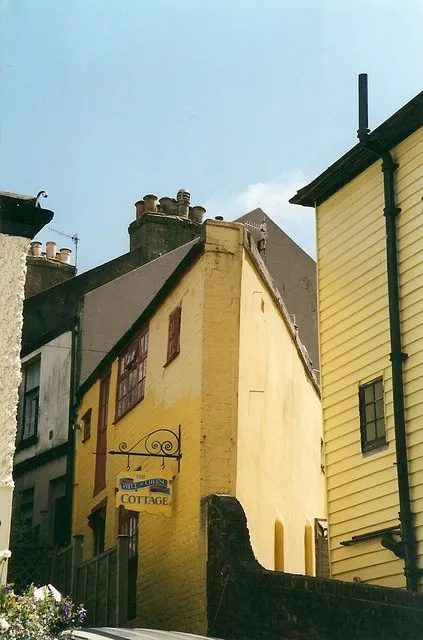
Photo: Richard Croft, CC BY-SA 2.0, via Wikimedia Commons
There is a quiet moment, usually on the drive home from a cottage, when someone in the car says: “We could just come back here.” And then, almost immediately, someone else says: “But there are so many other places.” Both are true. The UK is packed with lanes, villages, coast paths and moorland roads we have not yet driven down. But the assumption that new always means better deserves a second look. Sometimes the most restful weekend is the one where you already know which way the key turns.
The first stay is a reconnaissance mission
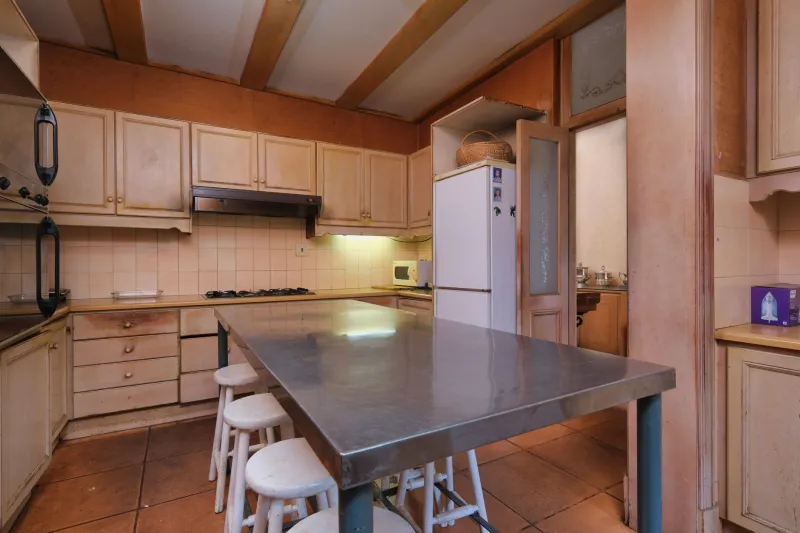
A first visit to a cottage involves a surprising amount of admin. You arrive in the dark, or in the rain, or both, and spend the first hour working out which cupboard hides the mugs, whether the shower runs hot straight away, and how far the pub really is when you are not reading the owner’s directions on a phone screen. Even a good first stay is partly a fact-finding exercise. You are learning the place while also trying to relax in it.
A second stay removes most of that. You know the bend in the lane where the satnav gives up. You know the back door sticks unless you lift it slightly. You know the village shop closes at five on Sundays and the nearest big supermarket is twenty minutes in the other direction. None of this is glamorous, but it is the stuff that makes a weekend feel easy. And easy, for many of us, is the whole point.
What changes when you already know the kettle
On a return visit, the cottage stops being a location and starts being a base. You are not spending Friday evening trying to work out the heating. You are not peering into the log basket wondering if there is enough kindling for two nights. You are not walking into the village in the wrong direction because you assumed the church spire marked the centre.
That familiarity creates space. Instead of asking “What shall we do?” you can ask “What did we wish we had done last time?” Perhaps you never made it to the little gallery down the lane, or the walk to the next village got rained off. Perhaps you meant to have a slow breakfast at the table by the window but were too eager to get out. A second stay lets you fill in those gaps without the pressure of discovering everything from scratch. It is a chance to be a little more deliberate and a little less frantic.
The same goes for the people you are travelling with. Couples who spent the first stay negotiating every decision can settle into a rhythm. Families who spent the first morning working out where the nearest park was can go straight there. Friends who argued over the best route to the pub can simply take the one they know works. There is a particular kind of holiday harmony that comes from not having to make quite so many choices.
Small rituals do the heavy lifting
One of the nicest things about a return stay is that it comes with its own traditions, even if they are tiny. The first cup of tea in the same mug. The short walk to the same viewpoint before breakfast. The bakery you now know opens at eight, not nine. The bench at the end of the lane where you always stop, ostensibly to admire the view, actually to catch your breath.
These rituals are not grand. They do not need to be. In fact, the smaller they are, the better they seem to work. A weekend away can easily become a tick-list of places to see and things to do, and there is nothing wrong with that. But a return visit gives you permission to do less. You can revisit the same short walk because you liked it, not because you are lazy. You can go back to the same pub because the fire was lit and the chips were good. You can spend an afternoon reading in the same chair by the window and feel no need to justify it.
That is the quiet joy of a second stay. It is not about novelty. It is about familiarity doing the work that novelty usually does — keeping you occupied, keeping you curious, keeping you in the moment — while asking far less of you in return.
When a return is worth it — and when it isn’t
A second stay is not automatically a good idea. If the cottage was cold, the road was noisy or the owner was difficult to reach, a repeat visit is unlikely to improve with age. The case for going back rests on the things that made the first stay work: a sensible layout, a generous kitchen, a comfortable bed, a location that suited the way you actually spend your time, and an owner who made the practical side of things feel straightforward.
It also depends on the season. A cottage that was perfect in July may be a different proposition in February. A garden that was a joy in early autumn may be muddy and uninviting in January. A village that was lively in summer may be very quiet in midwinter. None of that is necessarily a problem — a quiet village can be exactly what you want — but it is worth thinking through before you rebook. If your first stay was built around long evenings outside, ask yourself whether the same cottage will still work when the evenings are dark by half past four. Sometimes the answer is yes, with a fire and a good book. Sometimes it is no.
Ask before you rebook
A quick message to the owner is rarely wasted. Cottages change. A new boiler, a different sofa, a replaced shower, a change in the dog policy, a neighbour doing building work — none of these are unusual, and most owners are happy to tell you what has changed since your last visit. It is also worth asking about anything that matters to your particular weekend: whether the pub down the road is still open, whether the footpath behind the cottage is still accessible, whether the log burner is still in use, and whether the minimum stay has changed.
If the cottage itself is booked, ask whether the owner has another property nearby. Sometimes the second-best option is not a different village but a different door on the same lane. And if you are booking for a special occasion, say so. Owners who know you are returning often appreciate the context, even if they cannot do anything formal about it.
Don’t try to recreate the first trip exactly
The biggest risk with a return stay is trying to recreate the first one. The weather will not be the same. The pub may have changed hands. The walk you remember as a gentle loop may have been rerouted. The bakery may have stopped doing the particular loaf you loved. If you spend the weekend chasing an exact replica of last time, you will notice every difference and miss what is actually in front of you.
Better to treat the return as a new stay in a familiar place. Leave one afternoon free. Take a different path to the same viewpoint. Try the other pub. Drive ten minutes further down the road than you did last time. The point of going back is not to freeze a memory. It is to give yourself a comfortable base from which to make a few new ones.
The quiet pleasure of knowing the way
There is a reason people return to the same caravan park, the same campsite, the same guesthouse year after year. It is not a lack of imagination. It is the relief of not having to start from zero every time. A second stay at a cottage offers that same relief, with the added pleasure of a place that already feels a little bit yours.
So the next time you find yourself saying “We could just come back here,” it may be worth listening. Not every weekend needs to be an exploration. Sometimes the best escape is the one where you already know the way through the gate, where the kettle is where you left it, and where the only decision left is whether to go for the short walk before or after lunch.